Back To School Doggie Blues

dog-boy-reading-300x230It’s that wonderful time of year again where the kids go back to school and everyone’s routine has changed. Your schedule is packed full with little to no time to even take a breath. You’ve got to pack lunches, get the kids to school, drop the kids off at soccer practice, pick them up, feed the family, and then ahhhhh sit down on the couch for a few minutes before going back to bed and doing it all over again tomorrow. Sound familiar?

Fall is a busy time of year! It’s among the craziest for us at The Dog Haus as we constantly get last minute calls from clients begging us to take their dog because they have absolutely no time to exercise their mutt and he’s chewed the couch…again!!!

Being so busy often means dog walks come last on the “to-do list.” Unfortunately for our pets this is not only frustrating but stressful. Suddenly everyone in the pack leaves for hours on end all day long and the dog is all alone with nothing to do. With so much stored up energy, they wander around, bored as hell, only to find a shoe that smells just like you so they carry it around and feeling frustrated release their excess energy by cDog-Chewing-Shoeshewing it to bits. This is not a blatant screw you, but pretty much the only way they have to burn energy and at the same time sooth themselves. When this happens, take a good hard look at how little time you may be spending with your pooch. I still remember when I first got Carmen she would go through the garbage any time she felt she didn’t get a long enough walk that day. It was sad and hard for me to realize that I really shouldn’t punish her whenever she did this, instead I took her feedback and would do better the next day. Keep in mind that dogs have very few means to communicate with us. Any time you notice some bizarre or naughty behaviour, pay attention to what may have changed in your dog’s life. Did someone move out and go to college? Did your work hours change meaning you don’t walk the dog as long? Are you too tired to take the dog out at night when you get home? Your dog is speaking up to say his/her needs have not been met lately.
Some dogs experience depression and anxiety when the kids go back to school and their routine changes. It’s important that you not neglect your dog during this busy time so here are my suggestions to help you through this change.

  1. Tire your dog BEFORE dropping kids off at school and going to work. Better yet, walk your dog to school with the kids instead of driving – my personal favourite because I love getting two birds stoned at once 😉 plus it’s good for the environment!
  2. Use time with the dog as a stress reliever for you both – we all need to take time to relax which we rarely do. Come on a Meditation Walk with me to learn more on how to do this (next one is September 9th, 2018 10am at Hillside Park).
  3. Have fun together and play some games! Being with your dog should be rewarding to you both and play is a great way to bond.
  4. Redo some basic training – with everyone out of the house separation anxiety often creeps up. The best way to avoid this is to remind your dog of who is leader so that he doesn’t stress while you are away. It is also a way to provide mental stimulation and tire out your dog. You can always sign up for Dog Haus Training Essentials to learn more on how to be your dog’s leader and provide them with the exercise, discipline and affection they need.
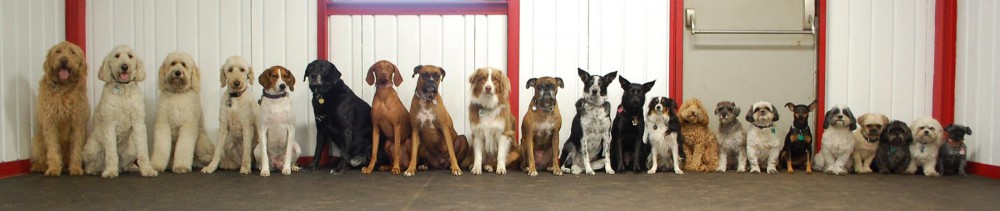
  5. Bring your dog to The Dog Haus or another dog daycare that has full day training and socialization for your dog. That way your dog is out of the house so he cannot destroy things and is being fulfilled by getting exercise, socialization and mental stimulation.
  6. Hire a dog walker. If you are unable to walk your dog pay someone else to do it. Having a backyard is not enough. Dogs need to be walked everyday, without exception!
The difference between “obedience” and “behaviour”

Exhibit A: Can your dog sit? Lie down? Roll over? Shake a paw? Play dead? And do other cool tricks?

Exhibit B: Does your dog wait patiently for food? Greet other dogs nicely? Not pull on leash, or jump on people, or go crazy when the doorbell rings?

Which would you prefer Exhibit A or B? Which is more practical behaviour in real life scenarios?

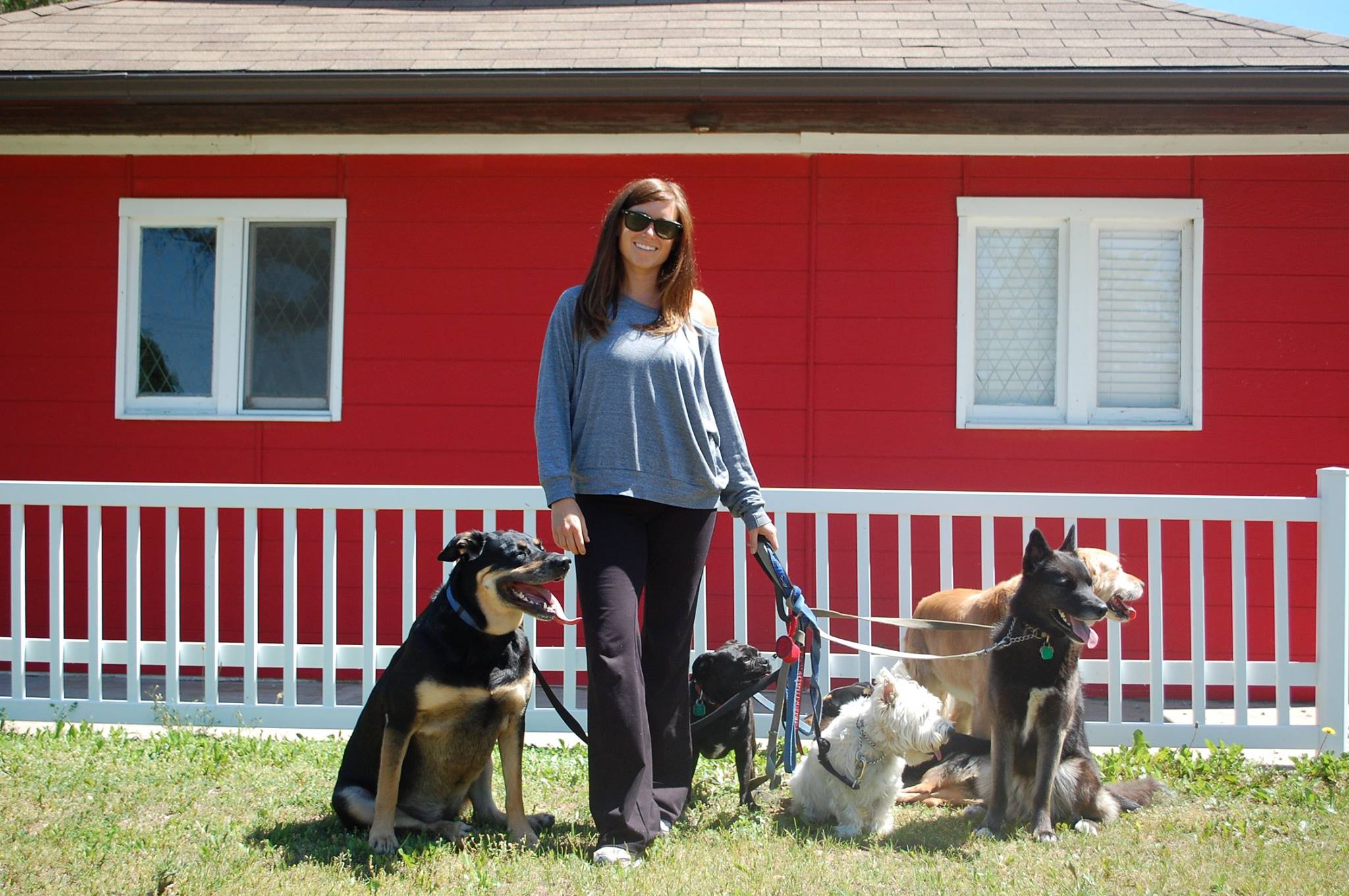
I’ve always wanted a dog I could take anywhere and would know just what was expected from her – almost telepathically as if we were psychically connected. Only 4 years ago I earned the trust and respect of a former street dog and accomplished exactly what I wanted in terms of training. Carmen is well liked by everyone and pretty much welcome everywhere, even technically places she’s not permitted to go, like cafes, clothing stores, patios, and even my mother’s house.

I never cared much about teaching Carmen cool tricks. What good is knowing how to play dead if you don’t know what “stop” or “come” means, which are actually life saving commands that every dog should know? I wanted a dog who listened in order to keep her safe.

10450098_10101687927611911_4538909660453309248_o It’s rather simple. Training to me is having a dog that looks to you for guidance on how to behave in every circumstance. Just like how we raise our kids, I want a dog who knows how to behave properly even in an overwhelming environment or when there are bad influences around. More over, I expect that even when I am not present. Behaviour is engrained, whereas obedience implies there is someone there to give the command. An obedient dog may “sit” and wait 2 seconds before you reward them with a treat, or throwing a ball or even receiving a pat on the head, but the mind is still active, typically in an excited or anxious state. A well behaved, balanced dog, will sit calmly and wait without fixation on what comes next. An obedient dog may know the basic commands but the question is do they follow them because they robotically know to go through the motions to get the reward? Obedience training focuses on the body. Is the body doing what I asked? Rarely do we look at the state of mind of the dog behind the action. Behaviour looks at both the body and the mind, and only rewards calm energy.

I’m sure you’ve all seen it at the daycare when we wait for the dog to sit before taking them out to the yard, but pay close attention next time. We wait beyond that, until both the body AND mind relaxes. That is what we reward with play!

Just remember: A calm dog is a balanced dog and a balanced dog is a behaved dog. And just like Carmen, a well behaved dog is welcome any where!

That’s my style of training. Want to learn more? Contact me for behaviour based training that will work for you and your dog.

10421542_10100672663944740_4841631212876168563_n

DOG GREETINGS 101

Imagine this, you’re walking your dog down the street and you see someone else approaching with their pooch. Without realizing you tighten up on the leash and reel your dog in. As you get closer you notice the other owner does the same thing, tightly wrapping the leash in a death grip with one hand as his extremely excited dog lunges forward to see yours. As the dogs meet you nervously instruct your pup in a high pitched voice to “be nice.” You stand there and ask the stranger what the dog’s name and breed is while the dogs greet face to face then wrap around getting tangled in each other’s leashes. Suddenly after a few moments there’s a nasty sound and you have to separate the otherwise “friendly” dogs. Embarrassed you abruptly leave, scolding your naughty dog. But what really happened?

Encounters like this aren’t unfamiliar to most dog owners. All too often we unintentionally set the dog up to fail in these situations. We allow our dogs to do the exact opposite of what they should do in proper greetings. We bring the dogs to meet face to face, usually in extremely excited states, with tension on the leash and linger for a long period of time. So let’s take a look at how greetings should be done.

1-dog-greeting

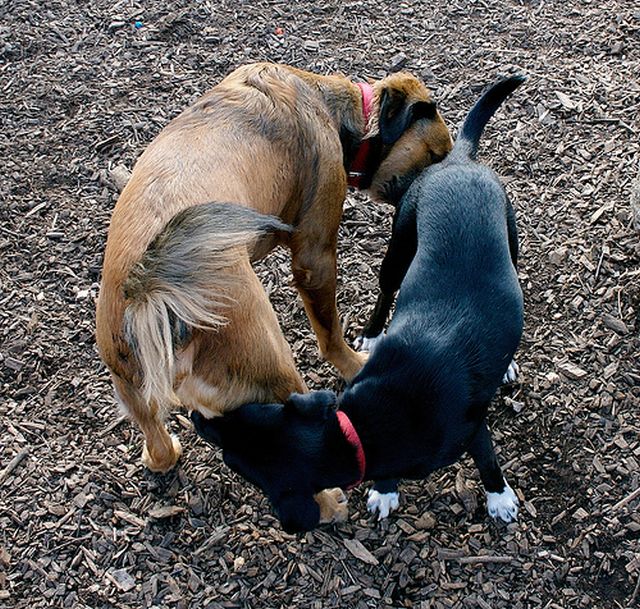
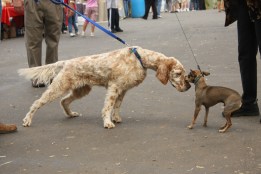
Dogs shake hands by sniffing each other all over and should start from the back and work their way to the front. Sniffing butts isn’t rude, it may not be how we say hello, but to dogs it is completely natural. Allow your dog to briefly smell that area of it’s new acquaintance so that he can gather the information he needs, like age, breed, health, sex, and so on.

Dogs should meet in a calm manner not overly excited or boisterous. When excited dogs meet, they tend to jump up on each other and it usually escalates very quickly to something unpleasant. Even the best of doggie friends can get carried away and clash with over the top greetings. Likewise a dog who is tentative and nervous about meeting another dog will not have a pleasant experience either. Wait until your dog relaxes and do not force him into a situation where he is not sure how to handle himself. Calm and confident is how you want your dog to approach.

dogs-meeting-for-the-first-time-by-aresauburnThere should never be tension on the leash when dogs are face to face. When the leash is pulled tight, the dog’s body leans forward communicating to the other dog he is staring directly in the face that he wants to challenge. This is when you will get a fight between the dogs. Always keep your dog beside you to keep him out of “protector” mode and so that you can pull sideways not back to remove him from a sticky situation. If there is tension on the leash this communicates to your dog that you are tense so his natural reaction will be to protect. Relax and your dog will too.
Don’t feel the need to stop and say hello to every dog. If for whatever reason you have a bad feeling, keep on walking. Especially if you are working on socializing your dog and greetings are difficult for him make sure you are comfortable with all introductions as it is very important that the dog has good encounters. Be up front with people walking their dogs and speak up on how the dogs should be introduced if you are going to allow them to say hello.

It’s important to not stop for too long and instead to keep moving, dog greetings don’t need to be lengthly. Dogs can smell from a fair distance away so they don’t need to stand around smelling each other for minutes on end. When this happens is when dogs tend to get nasty. It’s like that long awkward hand shake or close-talker at a party that makes you feel uncomfortable. No one likes that, so dogs will react in only one way; because they can’t run away as they are on leash the only other option is to fight. Introductions should be cut short so this doesn’t happen.

Remember that dogs communicate vocally at times so if there is a loud commotion but no one got hurt don’t just assume your dog is aggressive and stop allowing him to say hi. Reflect on the encounter and see what you could have done differently.

Reinforcing naughty behaviour

There’s no question that people love their pets, however, there is a major issue in when some owners  show their dog affection. What many people do not realize is that when you touch a dog who is fearful, anxious, possessive, dominant, hyper, begging, barking, shaking, or whining, you are actually rewarding an unwanted state of mind or behaviour. Touch to humans is comforting, whereas touch to dogs is a reward. Typically, if we see a dog who is behaving in a way that pulls on our emotional heartstrings, then we are inclined to hug and kiss them to make them feel better as we would a human. However this does not work with animals. Instead you are communicating to the dog that this is how they should be acting. What you are saying is, “I like what you are doing. Keep it up.” At the same time, owners also throw in the verbal “it’s OK” in a high pitched voice while petting their fragile dog in an unstable state, which further indicates that the dog is in fact doing the right behaviour. Unfortunately for owners, as much as we would like it to be the case, you can not hug, kiss, and love the fear, anxiety, aggression or bad behaviour out of a dog.

When you give affection to a dog you reinforce the behaviour that came before it.

So when is the right time to show affection? Affection should only be shared when a dog is in a calm submissive state. A great time for this is after you and your dog have gone on a long walk, so he is already tired and in the right state of mind. This also follows the rule that affection comes after exercise and discipline. You can also use affection to reinforce positive behaviours as a training method. If you ask your dog to sit before putting on the leash and they wait calmly and quietly, giving them a pet on the head says “good job.” Again using touch as a reward is a fantastic way to let a dog know when they are doing what is expected of them.

Sharing affection with your dog at the right or wrong time can have a huge affect in how they behave throughout their life. It’s important to always be mindful that when you give affection to a dog you reinforce the behaviour that came before it.

Are you the pack leader?

Recently I created a Pack Leader quiz as a fun way to assess where people fit in to their pack with just a few easy questions. The quiz was very simple and generalized but the questions I chose were specific to things that communicate to your dog whether or not you are the leader of your pack. Not surprisingly, many people were revealed as follower and not leader. I figured this was a great opportunity to write a blog to help people understand the little things they do that make them a follower and how they can redeem their role as leader.

Pack leader or follower

So what does it mean to be the pack leader exactly? Being pack leader means providing guidance and setting your dog up for success by taking away the stress of having to take the front position of the pack. In a pack there are only 2 positions: leader and follower. Dogs, like humans, are pack animals but unlike us, dogs will not follow an unbalanced leader. Dogs are drawn to calm assertive energy as their leader. Calm assertion means being even-tempered, confident and in control. If that energy is not present in the owner the dog will step in to control the situation even if it is unnatural for them. This is typically when we see behavioural issues develop like aggression, destructiveness, and anxiety among others, because a dog without leadership is unbalanced. The dog sees the human as a weak energy state making him lower on the totem pole towards the back of the pack so the dog will do what is necessary to fulfill her needs.

Here are the things to consider when it comes to being pack leader… 

1) A pack leader is calm assertive, never emotional, nervous or excited. The mother when giving birth to her litter is calm assertive and this is the first energy they experience. It is important for the human pack leader to have this same demeanour.

2) A pack leader provides direction and protection and fulfills his packs needs with exercise, discipline and then affection. A pack leader doesn’t just give love all the time. They provide structure and an outlet for energy first and foremost. It’s just like parents with children, they must do their homework (discipline) before they can go out side and play (reward).

3) A pack leader is always in control. He makes all decisions. He decides where to go, when to go, when to eat, and when to sleep. He starts and stops all activities. He doesn’t ask, “are you ok with my decision?” He just expects that his pack will follow. If your dog chooses when to play, walk, eat or wake up, then he is pack leader.

4) A pack leader is always consistent. If he does not continually uphold the rules, boundaries and limitations, then the other dogs will begin to test them. If you are only leader 80% of the time then your dog will only follow 80%. Being pack leader means providing guidelines 100% of the time.

pack leader quiz results

It’s never too late to start to implement these pack leader strategies to ensure the health and happiness of your pack. If you are experiencing any behavioural issues perhaps take a look at how you are with your dog and whether or not you’ve allowed him to be the pack leader. If you are unsure, take my quiz. Just remember, lead and your dog will follow.

Walk this way

dog on leashHave you ever noticed that the sign for “dogs must be on leash” is an illustration showing a dog in front of the owner with tension on the leash? A woman I met at the Cesar Millan training workshop pointed this out to me and then handed me a stack of stickers with the illustration of a dog with a loose leash walking BEHIND the owner. Brilliant I thought! The idea is to change people’s perspective on how we walk dogs by placing a sticker over each sign you see. This novel idea will take a huge movement and mean a lot of reeducation for owners.

Every day I see people on walks with their dog pulling on a tight leash ahead. When walking like this the dog sees himself as pack leader and this is when problems arise. Not only that, a dog greeting another dog on a tight leash is when you see the most dog fights happen. It is unnatural for dogs to meet face to face, and when a leash has tension and the dog pulls, their body language suggests a challenge to the other dog which then leads to aggression.

How you and your dog walk together says a lot about your relationship.

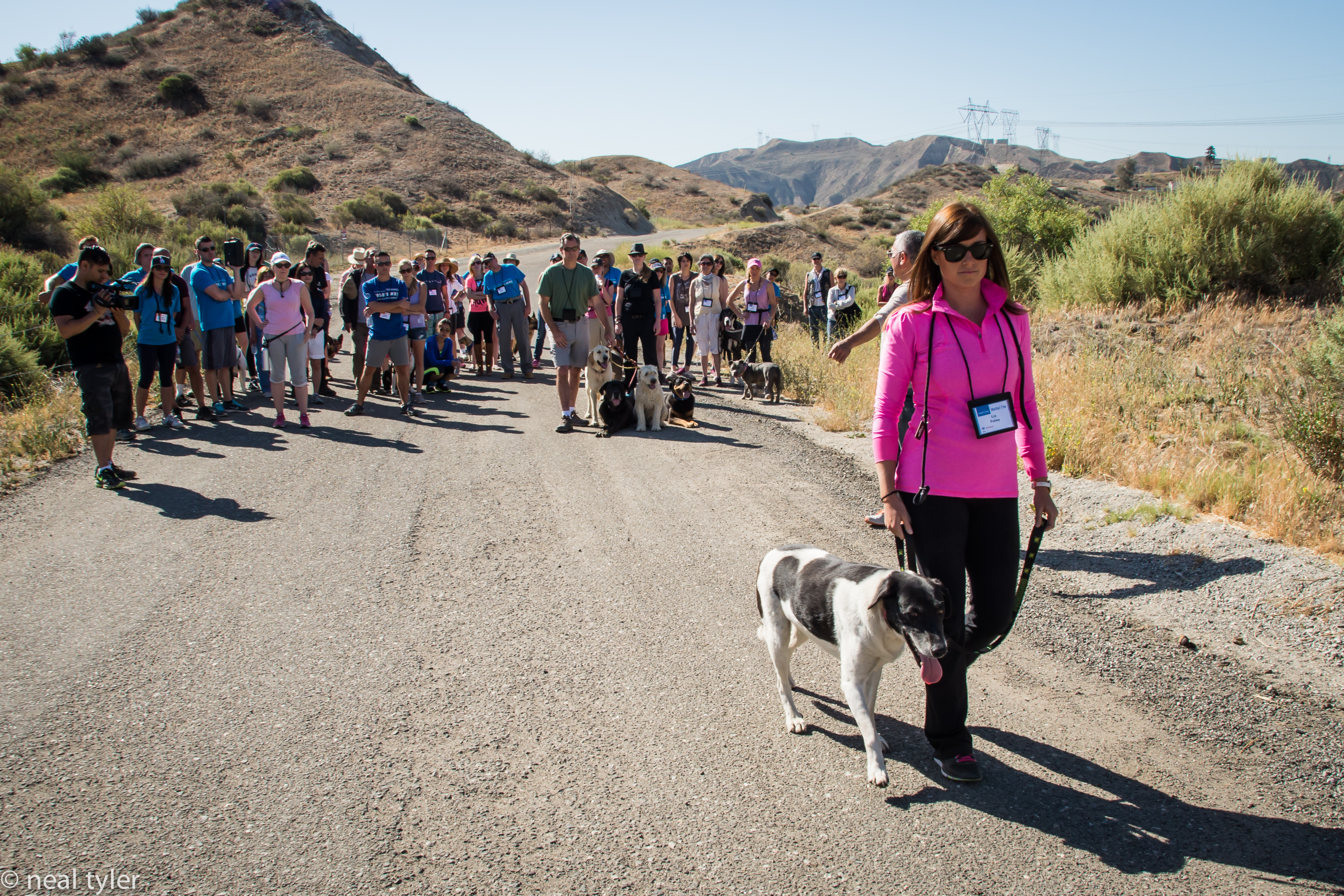
Each morning while training at the Dog Psychology Center, we started with a pack walk. Cesar Millan’s first rule for a balanced dog is exercise, then discipline and then affection – and he stresses that it must be done in that order. While walking each day I learned that the walk is just as much for you as it is for your dog. It allows you to clear your mind, exert pent up energy and balance yourself and your dog. I have always loved walking with Carmen and she does so well on leash, but I have found a whole new appreciation for it. At the end of our walks it feels as if I spent an hour in a yoga class or getting a massage, I am that relaxed. If only we could all experience this. Unfortunately not all dog lovers enjoy walks the way I do, even more unfortunate, some people don’t walk their dogs everyday or even at all.

TCW DAY 1-118

I believe that how you and your dog walk together says a lot about your relationship. If your dog charges ahead, then you are not in control enough to be the leader. If your dog drags behind or refuses to walk, again your energy is off in order to lead the pack. If you think about it our dogs are here to show us how simple life can truly be in this regard. We are too hung up on rushing things, doing everything quickly, multitasking, and not enjoying the little gifts this world has to offer. Next time your on a walk take a deep breath, relax your shoulders, and go slow. Make sure your dog is beside or behind you with no tension on the leash. You and your dog will enjoy the walk way more.