
Can you imagine what your life would be like if you didn’t have a bedroom? A space that is just your own where you can escape to relax by yourself when you’re feeling stressed or overwhelmed? No doubt this lack of privacy and personal space would bring a lot of anxiety and unease into your life. Your dog is very similar to you in the sense that they too crave a space to call their own. Dogs are naturally denning animals, which means they enjoy sleeping in dark enclosed spaces. This makes a crate the perfect way to fulfil this natural denning instinct in your dog as well as to give them a space that is all theirs where they can go to relax. Crating your puppy also has the added bonus of making potty training much easier! Dogs naturally do not like to go to the bathroom where they sleep, so the crate is an excellent tool for getting your puppy on a proper potty schedule.
Crate training is one of the most important things you can do with your puppy, and it should start the first night they’re home. When done right, crate training will create an association of calmness and safety with the crate for your puppy. Trust me when I say, while they may protest their first two or three times being alone in their crate, your puppy is truly craving the shelter and protection the crate provides and they will soon learn to love it!
The most important thing to remember when crate training your puppy is, say it with me, you get what you pet! So if your puppy screams and cries when you first put them in their new ‘bedroom’ (and chances are they will!), please do not console them in any way shape or form. The best thing you can do for them is to completely ignore their protests and let them figure things out on their own. Don’t speak to them or pet them because, while you may see this as you comforting your crying puppy, they will see this as you rewarding and reinforcing their anxious behaviour and this will create a very negative association with their crate.

If you brought your puppy home in a travel crate, they will already have had some exposure to a crate prior to their first night in your home. Even still, their first night in your home is going to be the most important interaction with their crate because it will set the stage for every other night moving forward. If your puppy screams and cries in their crate and you give in and let them on the bed that first night, they have just learned two things. Firstly, the crate represents panic and anxiety. And secondly, all they have to do is scream and they will be let out of their crate. So put in some earplugs and get into your most calm assertive mindset – this may be a long night.
Remember that this is going to be your puppy’s first night away from their mom and siblings, so along with being in a new place and being exposed to a crate for (likely) the first time, they are also without their family for the first time in their short life. Understandably, this is going to create a lot of stress and anxiety for your puppy, so it is completely natural for them to cry their first few nights with you. Don’t panic! Remain calm and assertive and always remember, you get what you pet.
I recommend keeping your puppy’s crate in your room at least for the first few nights as complete isolation may be too overwhelming for them right away. If you were planning on keeping them in a different room of the house, wait three or four nights until your puppy is completely comfortable with their crate before moving it into its permanent location outside of your bedroom.
After taking your puppy out for one last potty break before bed, lead them to their crate on leash to begin the introduction. Using the leash, apply light pressure to guide them into the open door. Do not drag your puppy into the crate – you want the decision to enter this new space to be their own. Keep the pressure constant and firm until they willingly walk into the crate, then relax tension as they enter it. Once your puppy is in the crate, do not immediately shut the door behind them. If they try to exit the crate, use either your body or the door of the crate to block them. Be patient! This is brand new for your puppy, so take your time and don’t rush this process. Once your puppy is calm and relaxed in their crate (ideally they will be sitting or lying down), silently close the door.
Once again, if/when your puppy cries in the night, do not let them out or pet them or speak to them in that baby voice we humans love so much. Ignore the behaviour and remember it will pass, no matter how endless the noise may seem now. Like most puppies, Sprout cried her first night in the crate but by her third night with me she walked right into it without me even having to tell her. It is now one of her favourite places in the house and she is comfortable in any crate I put her in whether it’s at daycare, in the car, or even at the vet!
Crate training isn’t just limited to bed time! In order to ensure your puppy is completely comfortable in their crate, I recommend crating them both when you are home during the day as well as when they are home alone. This will give your puppy some time to rest and recharge on their own, as well as prevent them from getting into things they shouldn’t or having accidents in the house!
So remember, no matter how hard your puppy may fight you the first night they are in the crate, it is actually the best thing for them and for you! Breathe deep, invest in some earplugs or headphones, and wait it out. I promise your puppy will thank you.
Thanks for reading and happy crate training. Don’t forget to stay tuned for next weeks Puppy Blog!
Claire
 r be ware if the dog shows any problem behaviours, especially those you are trying to fix in your own dog. To me it’s even more suspicious if the dog isn’t even at a training class. As a trainer myself, Carmen (my dog) is my BIGGEST asset and a huge marketing tool. This makes it sound like I pimp my dog out, when in fact I don’t. I do take my dog everywhere with me though, especially to classes I teach, and have people comment on how social, calm and well behaved she is (notice I didn’t use the word “Obedient”). Carmen is my demo dog in showing how to do things properly. She is proof of my own training methods and consistently doing exactly what I instruct clients to do with their dogs. Think of it like this, you wouldn’t hire a fat personal trainer, or a dentist with bad teeth. You’d want someone who is truly good at what they do because they practice what they preach.



 hewing it to bits. This is not a blatant screw you, but pretty much the only way they have to burn energy and at the same time sooth themselves. When this happens, take a good hard look at how little time you may be spending with your pooch. I still remember when I first got Carmen she would go through the garbage any time she felt she didn’t get a long enough walk that day. It was sad and hard for me to realize that I really shouldn’t punish her whenever she did this, instead I took her feedback and would do better the next day. Keep in mind that dogs have very few means to communicate with us. Any time you notice some bizarre or naughty behaviour, pay attention to what may have changed in your dog’s life. Did someone move out and go to college? Did your work hours change meaning you don’t walk the dog as long? Are you too tired to take the dog out at night when you get home? Your dog is speaking up to say his/her needs have not been met lately.

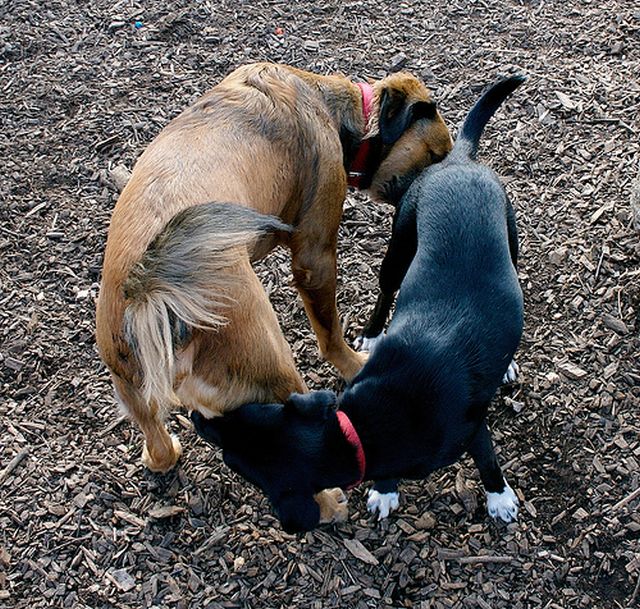
 There should never be tension on the leash when dogs are face to face. When the leash is pulled tight, the dog’s body leans forward communicating to the other dog he is staring directly in the face that he wants to challenge. This is when you will get a fight between the dogs. Always keep your dog beside you to keep him out of “protector” mode and so that you can pull sideways not back to remove him from a sticky situation. If there is tension on the leash this communicates to your dog that you are tense so his natural reaction will be to protect. Relax and your dog will too.


 MyDogPhilosophy.com